





A sudden breakdown of a truck on a highway means more than a repair bill: a delayed shipment, an angry customer, a stranded driver, and perhaps a replacement vehicle rental. Most fleets rely on two patterns: repair after failure, or maintenance by calendar. There is a smarter third approach called predictive maintenance, which uses the vehicle’s own data to tell you when maintenance is needed before the failure happens. In this guide we explain the idea clearly and how to apply it to your fleet.

Three maintenance approaches: what is the difference?
| Approach | When it works | Weak point |
|---|---|---|
| Corrective (after failure) | A cheap, non-critical part fails | Sudden downtime and higher cost at crisis time |
| Preventive (by schedule or distance) | Most fleets as a start | May replace healthy parts or miss an early fault |
| Predictive (by actual condition) | Important, costly vehicles | Needs data and monitoring systems |
The best is often a mix: preventive as the base, and predictive for the vehicles and parts with the highest impact.
What is predictive vehicle health monitoring?
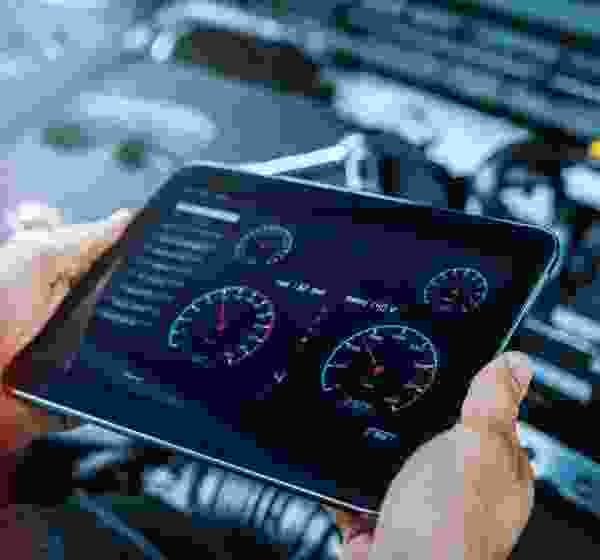
It is continuously collecting the vehicle’s readings and analyzing them to detect early signs of an upcoming problem. Readings that can be followed, depending on the device and the vehicle, include:
- Engine temperature and cooling indicators.
- Battery voltage and charging behavior.
- Engine operating hours and distance traveled.
- Fault codes recorded by the vehicle.
- Driving style: harsh braking and aggressive acceleration stress components and shorten their life, as seen in driver behavior monitoring.
- Unusual fuel consumption which may point to a mechanical problem, see fuel consumption monitoring.
Not all of these readings are available in every device and vehicle, so ask your provider what your device actually supports.

How do you benefit from the data in practice?
1. Early alerts. When a reading goes outside the normal range you get an alert, so you inspect the vehicle before it becomes a breakdown.
2. Smart scheduling. Instead of waiting for a calendar date, maintenance is scheduled by operating hours, distance and actual condition, in quiet periods to limit downtime.
3. Replacement decisions. You learn which vehicles cost more because of frequent faults, and decide on repair or replacement with numbers.
4. Reviewing workshop performance. Track the repetition of the same fault after repair to judge maintenance quality.
5. Linking maintenance with operations. Avoid sending a doubtful vehicle on a long trip or a critical task.
Want to know how your fleet data can warn you before a failure? Try it with the Pixa team.
Request a predictive monitoring demoIllustrative example
This is a hypothetical example for illustration only: a distribution truck works through summer, and the system notices that engine temperature repeatedly approaches its usual limits on hot days while similar vehicles stay normal. An alert reaches the maintenance supervisor, who checks the cooling system and finds a small problem that is fixed in an hour, instead of the truck breaking down on the road with a loaded shipment. The value lies in early detection and turning a big problem into a small scheduled repair.

Heat and heavy use in Saudi Arabia
Our hot climate, dust and long trips stress the fleet: cooling, batteries, tires and air-conditioning systems. So do not copy a maintenance schedule designed for milder conditions; monitor actual performance and adjust intervals to your operating environment, and apply the manufacturer’s recommendations for your vehicles as the main reference.
Building a predictive maintenance program step by step
- Start with the base: reliable tracking on every vehicle and a clear record of distance and hours, through the intelligent vehicle tracking and monitoring system.
- Choose the first vehicles: focus on the costliest or most important.
- Select the key readings for each vehicle type and set alert thresholds together with your workshop.
- Link each alert to a clear action: who receives it, what they check, and within how many hours.
- Document results: was the alert correct? What was found? Adjust the thresholds.
- Expand gradually to the rest of the fleet.
Indicators of program success
- Fewer sudden breakdowns on the road.
- Less unplanned vehicle downtime.
- Clear maintenance cost per vehicle and per kilometer.
- Workshop adherence to the maintenance schedule and documentation of work.
- Higher reliability and adherence to operating schedules.
Compare numbers before and after the program and do not rush to judge before enough time has passed.
Common mistakes
- Enabling too many alerts, which makes them lose value and the team ignores them.
- No one responsible for the alert: an alert without action changes nothing.
- Ignoring installation and data quality: a poor device gives misleading readings.
- Dropping routine maintenance entirely because monitoring exists, which is wrong; predictive complements routine and does not cancel it.
- Not training drivers to report early symptoms such as a strange noise or vibration.
Predictive maintenance and the rest of the fleet services
Maintenance works better when linked to the rest of operations: smarter routes reduce idling and unnecessary distance through route optimization, driver evaluation reduces wear, and a fleet system gives the whole picture; read more in the fleet management system guide. If your fleet includes electric vehicles, they have special considerations we cover in a separate article.
Calculating the return: how do you know the investment is worth it?
Before adopting the program, compare its cost with what it can help you avoid. Gather from your records the number of sudden breakdowns in the past year, the average cost of one breakdown (repair, towing, delay, replacement vehicle) and vehicle downtime days. These numbers are the basis of the estimate and differ by activity, so do not rely on general figures. If you have many costly sudden failures, the potential return is higher; if your failures are few, start with a limited scope. The key is to measure after rollout the same way so the comparison is fair.
The driver’s role in maintenance
Drivers are the first to notice changes: an unusual sound, vibration, a smell or weak brakes. Encourage early reporting and provide an easy channel, and reward reporting instead of punishing those who report a fault. If you link a driver’s report with system readings, diagnosis becomes faster and more accurate. A calm driving style also extends the life of the engine, brakes and tires, so follow it through driver tracking.
Maintenance, fuel and compliance
A vehicle with a mechanical problem usually consumes more fuel and emits more exhaust, so good maintenance serves both cost reduction and regulatory compliance. For vehicles under the Transport General Authority, make sure inspection and operating requirements are met, and see the authority’s official site for the latest requirements.
Common faults in fleets and how to monitor them
The most frequent problems in fleets are high engine temperature in summer, a weak battery, brake and tire wear, and air-conditioning problems. Give each problem a reading or indicator to track, and decide who acts on an alert. Over time you will find that a small number of causes produce most of the downtime, so you focus your effort on them.
Questions to ask your solution provider
- Which readings does the device support on my vehicles specifically?
- Can I set alert thresholds myself?
- How do alerts arrive: app, message, email?
- Can the solution connect to my maintenance records?
- Who supports me when I doubt a reading?
- Is data stored in a way that allows trend analysis over time?
Summary
Predictive maintenance is not magic, but a smart use of the data your vehicles already produce. Start with reliable tracking, then watch the most important readings, then link them to clear actions. To learn about Pixa’s integrated solution see the predictive vehicle health monitoring system.
Quick summary of predictive maintenance
- In short, predictive maintenance is an operational decision that needs clear criteria before rollout.
- Everything above about predictive maintenance depends on your activity and fleet size.
- Start with a small pilot of predictive maintenance, then expand after measuring results.
- Ask any provider for a live demo that shows predictive maintenance on your own vehicles.
- Document the results of predictive maintenance every month and compare them with your goals.
- The Pixa team can help you with predictive maintenance from planning to operation.
- The best predictive maintenance results come from accurate data and a trained team.
- Do not judge predictive maintenance from a single day, but from a long enough period.
- In short, predictive maintenance is an operational decision that needs clear criteria before rollout.
- Everything above about predictive maintenance depends on your activity and fleet size.
- Start with a small pilot of predictive maintenance, then expand after measuring results.
- Ask any provider for a live demo that shows predictive maintenance on your own vehicles.
- Document the results of predictive maintenance every month and compare them with your goals.
- The Pixa team can help you with predictive maintenance from planning to operation.
What is the difference between predictive and preventive maintenance?
Preventive relies on a fixed schedule or distance, while predictive relies on the vehicle’s actual condition and readings to decide when maintenance is needed.
Do I need to change my vehicles to apply it?
Usually not; a suitable device that reads vehicle data is enough, but the readings available vary by model and device.
Does predictive maintenance cancel routine maintenance?
No, the best is to combine them: routine as a base and predictive to catch early problems.
Is it suitable for small fleets?
Yes, especially if one vehicle stopping disrupts your work, but start with the most important vehicles.
How long until results appear?
Indicators appear within weeks, but judging the effect on failures and costs takes longer.