

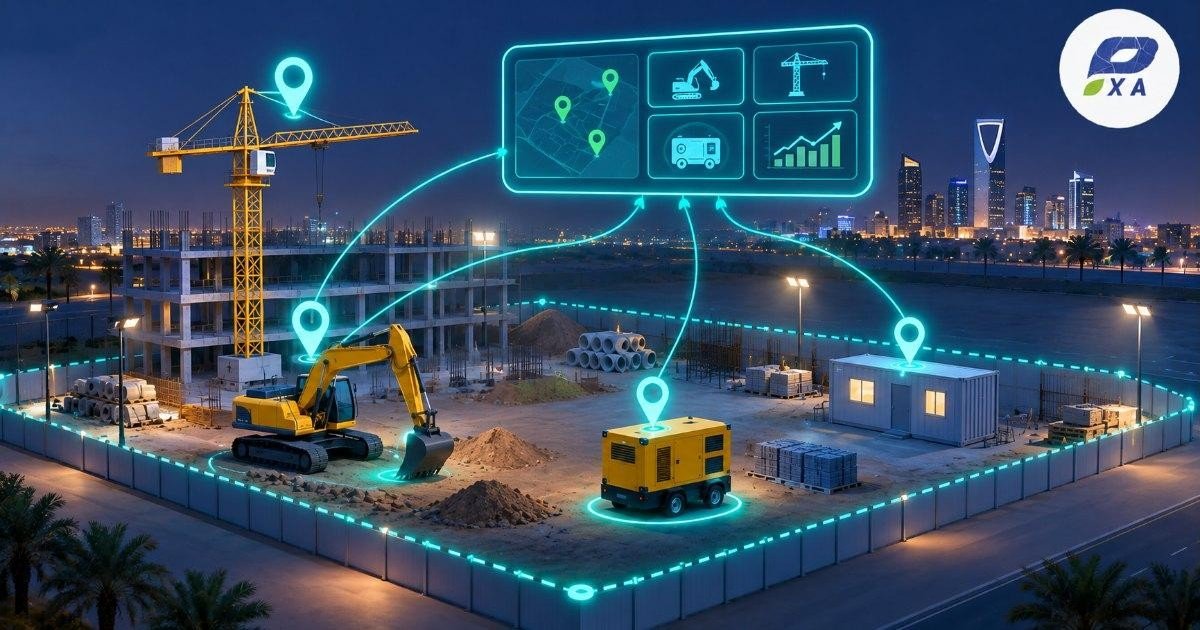

In many companies, vehicles are not the only moving assets. You have excavators, cranes, generators, pumps, containers, trailers and small equipment spread across projects and warehouses. The bigger the company, the harder the question: where is that piece of equipment? Is it working or idle? Who used it last? Losing a single piece of equipment or having it stolen can cost tens or hundreds of thousands of riyals, not to mention project delays. In this article we explain how asset and equipment tracking helps you protect company property and increase utilization.
What is asset tracking?
Asset tracking uses smart devices and technologies to continuously know the location and status of company assets, whether heavy equipment, generators, containers or goods in transit. This data is displayed on one platform that brings all your assets together.
Asset tracking technologies
- Hardwired GPS devices: for equipment with a power source, such as excavators, cranes and generators.
- Long-life battery GPS devices: for unpowered assets such as containers and trailers, working for long periods with periodic location updates.
- Bluetooth and smart tags: for tracking tools and small equipment inside warehouses and sites.
- Engine-hour sensors: to know how many hours each machine has actually worked.
Benefits of asset and equipment tracking
1. Theft protection
Instant alerts when equipment is moved off site or at an unauthorized time, with its location so it can be recovered quickly.
2. No more losing equipment between projects
Know where every machine is at any moment, so you never buy or rent equipment you already have on another site.
3. Higher utilization
See which equipment is working and which is idle, and redeploy it to projects that need it instead of renting.
4. Maintenance based on operating hours
Servicing by actual working hours protects equipment from major breakdowns and extends its life.
5. Accurate billing of working hours
In equipment rental or projects billed by the hour, recorded operating hours become an accurate basis for invoicing.
6. Tracking goods in transit
Shipping companies can track high-value shipments themselves, not just the vehicle, to make sure they arrive complete.
Who needs asset tracking?
- Contracting and infrastructure companies.
- Heavy equipment and generator rental companies.
- Oil, gas and mining companies.
- Shipping, container and logistics companies.
- Municipalities and public service companies.
- Event companies moving equipment between venues.
Steps to implement asset tracking
- Asset inventory: list all equipment and assets, their value and current locations.
- Set priorities: start with the highest-value assets most exposed to theft or loss.
- Choose the right technology: hardwired, battery-powered or smart tags depending on the asset type.
- Map your sites: define project sites and warehouses as geofences in the platform.
- Enable alerts: for unauthorized movement and leaving sites.
- Link maintenance: schedule maintenance by operating hours.
A simple practical scenario
A contracting company runs several projects in Riyadh and Qassim, with generators and excavators spread across them. Before tracking, it rented equipment for a new project while similar equipment sat idle on another site without management knowing. After installing trackers and engine-hour sensors, it could see the status of every machine on one dashboard, move idle equipment to the projects that needed it, and receive instant alerts for any movement outside working hours.
Pixa smart asset and cargo tracking
Pixa offers smart asset and cargo tracking with devices suited to every type of asset, hardwired or with long-life batteries, plus engine-hour sensors, unauthorized movement alerts, site geofencing and smart warehouse heat maps, on one Arabic platform with local technical support.
Learn more: discover Pixa’s Smart asset and goods tracking service.
Frequently Asked Questions
How long does an asset tracker battery last?
It depends on how often the location is sent; asset trackers are designed to work for long periods with periodic updates.
Can equipment without a power source be tracked?
Yes, using trackers with independent batteries, for example on containers and trailers.
Can I know the equipment’s operating hours?
Yes. Sensors record engine running and the actual working hours of each machine.
Can vehicles and equipment be shown on one platform?
Yes. The Pixa platform brings fleet, equipment and assets together in one dashboard.
Protect your company’s assets and know where every machine is at any moment. Contact Pixa for a quote on smart asset and cargo tracking. Contact us now